Daycare Safety Tips for Parents: Lessons from the Bengaluru Nanny Case
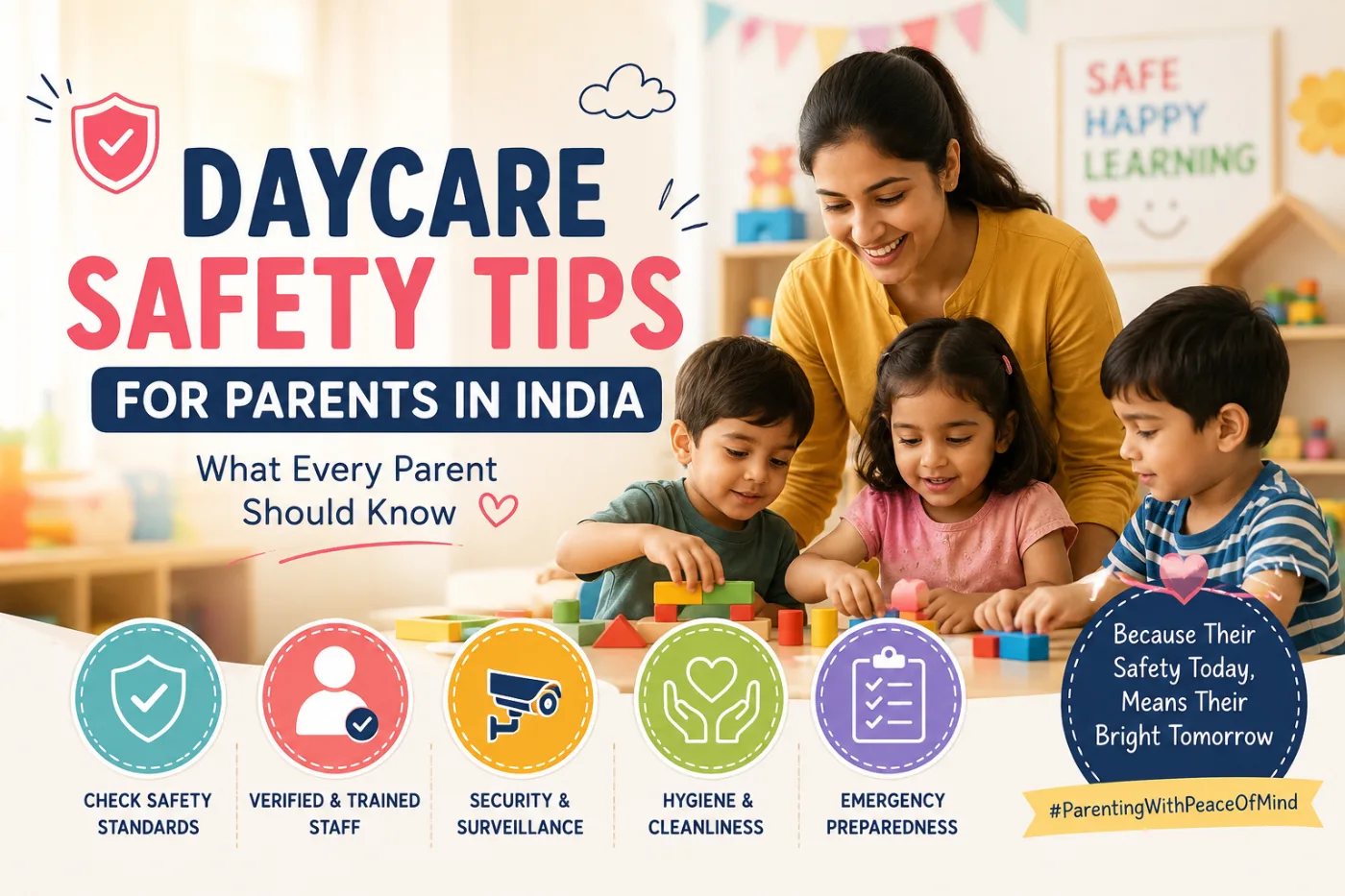
An early-childhood-educator's guide for the MommyTales community — because "Learn · Play · Grow" only works when a child feels safe first.
If you're searching for daycare safety tips right now, chances are you didn't land here out of idle curiosity — you probably saw the video too. In July 2026, footage from a daycare inside a Bengaluru IT campus stopped thousands of Indian parents mid-scroll. Toddlers as young as two were allegedly locked in a bathroom to stop them from crying, sprayed in the face with a toilet jet, and placed inside a washing machine by their own caregivers. Five nannies were booked, two were arrested, and the National Commission for Protection of Child Rights (NCPCR) launched a suo motu inquiry into how it happened at all.
For most parents, the first reaction is fear. The second, more useful reaction is a question: how do I make sure this never happens to my child? This guide breaks down the case, why early trauma matters so much developmentally, and practical, expert-informed daycare safety tips for choosing and monitoring daycares and nannies.
What Actually Happened: A Timeline
Toddlers at a daycare inside the Capgemini campus, Brookefield, Bengaluru, are allegedly locked in a bathroom, sprayed with water, and placed in a washing machine by caregivers.
A Child Helpline official receives videos of the abuse and alerts the police.
Police register an FIR under the Juvenile Justice Act and the Bharatiya Nyaya Sanhita; five caretakers are booked, two arrested.
NCPCR takes suo motu cognisance and sends a team to inspect the facility and review CCTV footage and staff records.
Karnataka authorities direct daycares to provide parents live CCTV access, and NCPCR pushes for a formal childcare SOP.
What makes this case so unsettling isn't that it happened in an unregulated back-alley crèche — it happened inside a well-known corporate campus, the kind of "trusted, convenient" setup thousands of working parents rely on every day. Reputation and infrastructure are not the same thing as safety. Safety has to be verified, not assumed.
Children under three can't yet put fear into words. Distress from an unsafe caregiving environment instead shows up as regression, clinginess, sleep disruption, or unexplained aggression — often weeks later. The caregiver-child bond in these years is the foundation for a child's sense of trust in the world. When that bond is violated by the very adults meant to protect them, it isn't "just a bad daycare experience" — it can shape how a child relates to authority and trust for years.
Red Flags: Warning Signs in a Daycare or Nanny
Resists being observed
Reluctance to install CCTV, discomfort with drop-in visits, vague answers about the daily routine.
High staff turnover
Frequent caregiver changes usually signal poor working conditions — which correlates with poor supervision.
No written child-protection policy
A daycare that can't show you a policy on discipline, toileting, and incident reporting likely doesn't have one.
Overcrowded rooms
Too many toddlers per caregiver is one of the strongest predictors of neglect — no one can watch everyone at once.
Punitive language about crying
"We make sure they stop crying" instead of "we comfort them" is a red flag for punishment-based control.
Sudden change in your child
Regression, flinching around a specific person, nightmares, or refusal to go back — always worth investigating.
Daycare Safety Tips: A Checklist for Choosing One Safely
India's Ministry of Women and Child Development introduced the National Minimum Standards and Protocol for Crèches to define what a safe daycare should look like. Use these daycare safety tips as your baseline, then verify each point in person.
- 1 caregiver + helper per 10 children under age 3 (1:20 for ages 3–6) — count the room yourself.
- Live/reviewable CCTV in every room, including transition areas — ask how long footage is retained.
- Staffed, secure entry with sign-in/out register and an ID-verified authorised pickup list.
- Visible first-aid & emergency plan, including a nearby hospital tie-up.
- Police-verified staff — every caregiver, not just senior staff.
- Welcomes unannounced visits — if that makes them uncomfortable, that's your answer.
Hiring a Nanny: What Real Verification Looks Like
A nanny works with far less oversight than a daycare, which makes due diligence even more important, not less.
- Verify identity and address — Aadhaar confirmation plus a permanent address check, not just a phone number.
- Get police verification in writing, available via most local stations or placement agencies.
- Call at least two previous families yourself — ask directly why the last job ended.
- Run a paid trial period with you present, before ever leaving her alone with your child.
- Check basic training — infant CPR, choking response, safe sleep. Get her trained before day one if she isn't.
- Install home CCTV in common areas (not the child's bathroom) and review it regularly, not just once.
Teaching Your Child Body Safety, Age-Appropriately
Prevention isn't only about vetting adults — it's about giving even a toddler words and agency, without frightening them. The earlier a child has the vocabulary to name what happened, the sooner they can tell you — our step-by-step guide to teaching phonics at home is a good place to start building that language foundation early.
Name body parts correctly
From early on — it removes confusion and shame later.
Teach "safe touch" vs. "unsafe touch"
And that it's always okay to say no and tell a grown-up.
Repeat the promise
"You'll never be in trouble for telling me, even if someone said keep it a secret."
Rehearse through play
Books and guided pretend-play let toddlers process big ideas safely.
If You Suspect Something Is Wrong
- Document before confronting — dates, behaviors, marks, exact quotes.
- Request CCTV footage in writing and note whether the daycare cooperates or stalls.
- Report it — Childline India, 1098 (toll-free, 24×7), the NCPCR's POCSO e-Box, or your local police station.
- Get your child support — a pediatrician or child psychologist can help you read the behavior and respond without adding pressure.
The Bengaluru case wasn't a failure of one bad daycare — it was a failure of assumption. Parents assumed a well-known campus facility meant safety was handled. It wasn't. Verification isn't distrust; it's how you love a child who can't yet advocate for themselves. That's the whole point of these daycare safety tips — verification over assumption, every single time.
At MommyTales, we believe safety and development go hand in hand — a child who feels secure is a child who is free to learn, play, and grow. Bookmark these daycare safety tips, share them with another parent building their own shortlist, and revisit them before every enrolment decision.
How to Teach Phonics at Home: Step-by-Step Guide
Side Effects of Mobile Phone Use on Children: What 2026 Research Shows
Browse educational toys that build early language and confidence
Frequently Asked Questions
QHow many children should one caregiver look after in a daycare in India?
Government crèche guidelines recommend one caregiver plus one helper for every 10 children under age 3, and one caregiver plus one helper for every 20 children aged 3 to 6. Ask this number directly during your visit and count the room yourself — don't take it on trust.
QIs CCTV mandatory in daycares in India?
It isn't uniformly mandatory nationwide yet, but after the 2026 Bengaluru daycare case, Karnataka has directed daycares to give parents live CCTV access, and the NCPCR is pushing for a formal national SOP. Treat live, parent-accessible CCTV as a non-negotiable when you're choosing a daycare, regardless of what's legally required in your city.
QHow do I background check a nanny in India?
Verify her Aadhaar and permanent address, request police verification in writing (available through most local police stations or placement agencies), call at least two previous employer families yourself, and run a paid trial period with you present before ever leaving her alone with your child.
QWhat are the warning signs of nanny or daycare abuse?
Resistance to being observed, high staff turnover, no written child-protection policy, overcrowded rooms, punitive language about crying, and sudden changes in your child's behavior — regression, flinching around a specific person, nightmares, or refusal to go back.
QWhat should I do if I suspect my child is being abused at daycare?
Document what you've observed, request CCTV footage in writing, and report it to Childline India at 1098 (toll-free, 24×7) or the NCPCR's POCSO e-Box. Get your child support from a pediatrician or child psychologist alongside the investigation, not after it.
QWhat happened in the Bengaluru daycare case?
In July 2026, videos surfaced showing caregivers at a daycare inside Bengaluru's Capgemini campus allegedly locking toddlers in a bathroom, spraying them with water, and placing them in a washing machine. Five nannies were booked, two arrested, and the NCPCR opened a suo motu inquiry.
Sources:
Deccan Herald — Two nannies arrested in Capgemini daycare abuse case
Republic World — Bengaluru daycare case registered under JJ Act
Deccan Herald — NCPCR takes cognisance of Bengaluru daycare case
Organiser — Karnataka orders live CCTV access for parents